

08 Ago Transaction Simulation, Multi-Chain Wallets, and the Real Limits of DeFi Security
You are about to swap a stablecoin for another token on a familiar DeFi platform. The amount looks ordinary, the network fee is acceptable, and the wallet asks you to confirm. Then a transaction simulation reveals something the interface did not make obvious: the call would grant a contract permission to move more assets than the trade requires. The danger is not a dramatic warning or a visibly fraudulent website. It is a mismatch between what the user thinks will happen and what the blockchain transaction is actually authorized to do.
This is why transaction simulation has become an important security layer for multi-chain wallets. It can translate a proposed transaction into an estimate of its likely state changes before the user signs. That does not make a wallet automatically safe, nor does it eliminate the need to verify websites, contracts, and network details. But it changes the central question from “Does this transaction look familiar?” to “What could this transaction change?”
Two security models: signing first or understanding first
The traditional wallet model is relatively direct. A decentralized application prepares a transaction, the wallet displays selected fields, and the user approves a signature. This approach is transparent in one sense: the blockchain executes precisely what was signed, subject to the protocol’s rules. Its weakness is cognitive. Raw calldata, contract addresses, token identifiers, and hexadecimal parameters are difficult for most people to interpret, especially when several actions are bundled together.
A simulation-first model adds an interpretive step. The wallet submits the proposed transaction to an execution environment that estimates what would happen if the call were processed. Depending on the chain and the transaction, the result may indicate tokens received, assets spent, approvals granted, positions altered, or whether the call would revert. In effect, the wallet presents a forecast of state changes rather than merely a request for authorization.
The comparison is not between an unsafe wallet and a safe wallet. It is between different failure surfaces. Without simulation, the user bears more of the burden of decoding transaction intent. With simulation, the user relies partly on the accuracy, availability, and presentation of an external analysis system. The first model risks human misinterpretation; the second introduces model coverage, node reliability, and interface interpretation as additional dependencies.
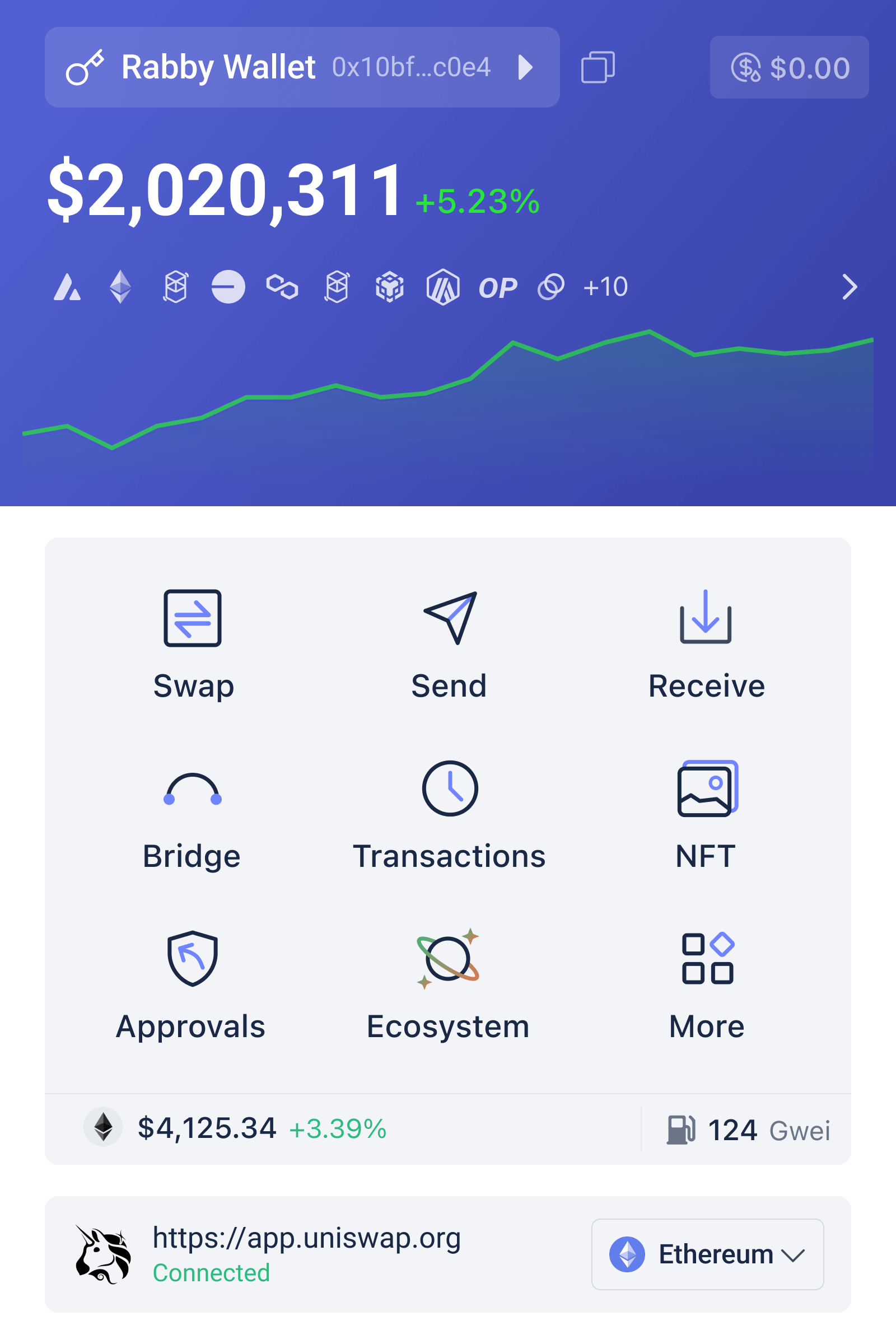
For users who need a browser-based, multi-chain workflow, installing the rabby wallet extension can be useful as an entry point to reviewing transaction details before signing. The important security practice is not installation by itself. It is learning to treat the wallet’s interpretation as a decision aid that must be checked against the user’s intended action.
What transaction simulation actually does
At a technical level, a simulation executes a proposed call against a selected blockchain state without broadcasting it as a finalized transaction. The execution engine uses the transaction’s target address, input data, sender address, value, and relevant fee parameters. It then observes the predicted result. If the call would fail under the simulated conditions, the wallet may identify a likely revert. If it succeeds, the wallet can inspect changes to balances, allowances, ownership records, or protocol positions.
This mechanism matters because transaction intent is often distributed across multiple layers. A user may think they are swapping one asset, while the application requests an approval first, invokes a router, calls several pools, and returns a different token. In another case, a “claim” action may write a permission or interact with a contract that has broader authority than its visual label suggests. Simulation can expose the outcome of this sequence more clearly than a raw signature prompt.
There is a useful distinction between authorization risk and execution risk. Authorization risk concerns what the user permits: an unlimited token allowance, an operator permission, or a signature that gives another party control over an asset. Execution risk concerns what the transaction may do when processed: swap at an unfavorable rate, transfer an unexpected asset, or fail because conditions changed. Simulation is particularly valuable for showing execution consequences, while allowance management and signature hygiene remain necessary for authorization risk.
Why “simulation passed” is not a security certificate
A successful simulation means that a transaction could execute under the simulated state and parameters. It does not prove that the destination contract is trustworthy, that the website is authentic, or that the economic result is favorable. A malicious contract can produce a technically successful transfer. A phishing site can construct a transaction that simulates cleanly while directing funds to an attacker. Simulation describes behavior; it does not establish legitimacy.
There is also a timing boundary. Blockchain state changes continuously. Liquidity, token balances, oracle values, nonces, and contract conditions may differ between simulation and inclusion. A transaction can pass simulation and later revert, or execute with a different economic result if market conditions move. This is especially relevant on high-activity networks and for transactions whose outcome depends on slippage, block ordering, or external price data.
Multi-chain wallets: convenience versus expanded attack surface
A multi-chain wallet reduces friction. Instead of maintaining separate tools for every network, a user can manage assets and applications through one interface. That convenience is meaningful for US-based DeFi users who may move between Ethereum-compatible networks, layer-two systems, and other supported ecosystems with different fee markets and application conventions.
Yet consolidation changes the risk profile. A single compromised browser profile, leaked seed phrase, malicious extension, or deceptive signing request can affect assets across multiple networks. Network confusion is another practical hazard. A token with a familiar name may exist on several chains, while a user may assume that an address, bridge route, or contract behavior is interchangeable across them. It often is not.
Simulation helps by placing network-specific consequences in view, but it cannot correct every category error. It may show that assets will leave one chain and arrive on another, while the user still misunderstands bridge custody, settlement time, or the trust assumptions of the bridge. A wallet can identify a contract interaction without explaining whether the protocol’s governance, upgrade authority, or oracle design is acceptable for the user’s risk tolerance.
The sharper mental model is to treat a multi-chain wallet as an operating console, not a universal safety boundary. It coordinates keys, applications, networks, and transaction interpretation. The security of the resulting system depends on every layer: the browser environment, the wallet software, the connected application, the blockchain, and the user’s verification process.
A practical comparison for different DeFi tasks
For a simple transfer to a known address, simulation may offer limited additional value, although it can still expose an incorrect network, unexpected fee behavior, or an address that is not what the user intended. Manual verification remains central because the primary risk is destination accuracy rather than complex contract execution.
For a token swap, simulation becomes more useful. The reader should examine which asset leaves the wallet, which asset arrives, whether an approval is requested, and whether the quoted output is compatible with the stated slippage tolerance. A simulation may reveal that the transaction is not merely a swap but a sequence involving approvals and router calls.
For lending, staking, liquidity provision, and vault interactions, the comparison becomes more difficult. Simulation can show immediate token movements and position changes, but it cannot fully represent future liquidation risk, variable rates, impermanent loss, strategy losses, or governance decisions. These are economic and institutional risks rather than merely transaction-level risks.
For signing messages rather than submitting transactions, users should be especially cautious. A message may not consume gas and may not look like a conventional blockchain action, yet it can authorize an off-chain order, permit, or marketplace operation. Transaction simulation may not provide the same level of visibility for every signature format. The absence of a warning should never be treated as evidence that a signature is harmless.
How to use simulation without outsourcing judgment
A disciplined workflow can be brief. First, identify the application and confirm that the domain is the one you intended to visit. Second, check the active network and the account. Third, read the wallet’s predicted changes: assets spent, assets received, approvals, and contract permissions. Fourth, compare those changes with the purpose of the action. If the operation is a small swap but the prompt implies broad authority or an unrelated transfer, stop.
For larger positions, use separation rather than convenience. A wallet used for experimental applications should not hold the same concentration of assets as a long-term storage account. Test unfamiliar contracts with a small amount, revoke unnecessary allowances when appropriate, and keep recovery material offline. These measures address weaknesses that simulation cannot solve.
It is also useful to distinguish a warning from a verdict. Security interfaces often use labels, risk signals, and known-entity information to make complex behavior legible. Such signals can be valuable, particularly for non-specialists, but they are not infallible. New contracts may lack history; legitimate applications may change; malicious transactions may be designed to resemble ordinary activity. A prudent user asks what evidence produced the warning and what uncertainty remains.
What to watch next
The likely direction of wallet security is greater emphasis on intent: not simply displaying calldata, but comparing the proposed action with the user’s stated goal and normal account behavior. If these systems improve, the most useful warnings may be contextual ones—such as an unexpected approval, a chain mismatch, or a transaction that differs sharply from the application’s visible request.
That development would still face a fundamental constraint. Intent is difficult to infer when protocols compose several contracts, transactions are bundled, and economic outcomes depend on changing market conditions. More automation could reduce routine mistakes while creating a new risk: users may approve warnings reflexively because the interface appears authoritative. The strongest designs will therefore make uncertainty visible instead of hiding it behind a simple pass-or-fail color.
For now, the decision rule is modest but durable: use simulation to inspect consequences, use independent verification to assess legitimacy, and use operational controls to limit the damage if either layer fails. The most secure transaction is not necessarily the one with the clearest green indicator. It is the one whose authority, destination, network, and expected state changes the user can explain before signing.
Frequently asked questions
Does transaction simulation prevent a wallet from being hacked?
No. Simulation can identify unexpected transaction outcomes, but it does not protect a seed phrase, browser session, device, or connected application from compromise. It is a review layer, not a complete security system.
Can a simulated transaction still lose money?
Yes. The blockchain state may change after simulation, prices may move, slippage may be realized, or the contract may be malicious despite executing as predicted. Simulation improves visibility but cannot guarantee a favorable economic result.
Why does a multi-chain wallet require extra caution?
It brings different networks, contracts, assets, fee systems, and bridge assumptions into one interface. This is convenient, but a mistake in network selection or a compromised wallet environment can affect more than one chain.
Sorry, the comment form is closed at this time.