

22 Jun Risk Assessment in a Multi-Chain Wallet: What DeFi Users Should Actually Evaluate
A common misconception is that wallet security is mainly a question of whether a private key can be stolen. In practice, many losses occur before that point: a user signs an approval for the wrong token, interacts with a counterfeit contract, misreads a cross-chain transaction, or fails to notice that a familiar application has changed its behavior. The difficult problem is therefore not simply storing a key. It is interpreting intent under uncertainty.
That distinction matters for US-based DeFi users operating across Ethereum and other EVM-compatible networks. A multi-chain wallet can reduce friction by bringing accounts, applications, and transaction flows into one interface. It can also concentrate decision-making in a single screen, where a misleading prompt or misunderstood permission may affect several assets and networks. The right question is not whether a wallet is “safe” in the abstract, but which risks it makes easier to see, which it leaves to the user, and where its protections stop.
From key protection to transaction interpretation
Private-key security remains foundational. If an attacker controls the key, cryptographic ownership has effectively changed hands. Yet a correctly protected key does not guarantee a safe outcome. DeFi transactions are instructions submitted to smart contracts, and those instructions can authorize transfers, alter collateral positions, trade assets, or grant spending rights. The wallet may be functioning exactly as designed while the user approves an economically harmful action.
This is why transaction simulation is potentially more important than a simple “confirm” button. A simulation attempts to estimate the state change produced by a proposed transaction before it is broadcast. Instead of showing only technical data such as a contract address and gas fee, a useful preview can help answer practical questions: Which tokens are expected to leave the account? Which assets may arrive? Is an allowance being created? Does the action appear to affect a different chain or account than intended?
The mechanism is valuable because it converts an opaque instruction into a forecast of consequences. That does not make the forecast infallible. A simulation depends on the state used to evaluate it, the behavior of the relevant contracts, and the ability of the interface to represent complex outcomes accurately. A malicious or unusual contract may behave differently under conditions that are not captured by the preview. Simulation should therefore be treated as an additional layer of evidence, not as a guarantee.
Why multi-chain convenience changes the risk model
In a single-chain environment, users still face contract risk, phishing, oracle failures, and approval abuse. A multi-chain wallet adds another dimension: context switching. The same asset symbol may appear on different networks, while bridge mechanisms, wrapped assets, fee tokens, and application deployments vary by chain. An address that is trusted in one environment may not have the same role elsewhere.
The cognitive risk is easy to underestimate. A user may intend to deposit an asset into a lending market but overlook that the selected network is different from the one holding the desired liquidity. A bridge transaction may involve a token representation that is economically or operationally distinct from the native asset. Even when no attacker is present, a mistaken chain selection can produce delays, unexpected fees, or a difficult recovery process.
A practical mental model is to treat every transaction as having three layers of identity: the account, the network, and the contract. Asset names are not enough. Before approving a consequential action, a user should confirm all three, then ask whether the resulting change matches the economic purpose of the transaction. This is slower than blind signing, but it is also the kind of friction that prevents an expensive mistake.
Where Rabby fits among wallet choices
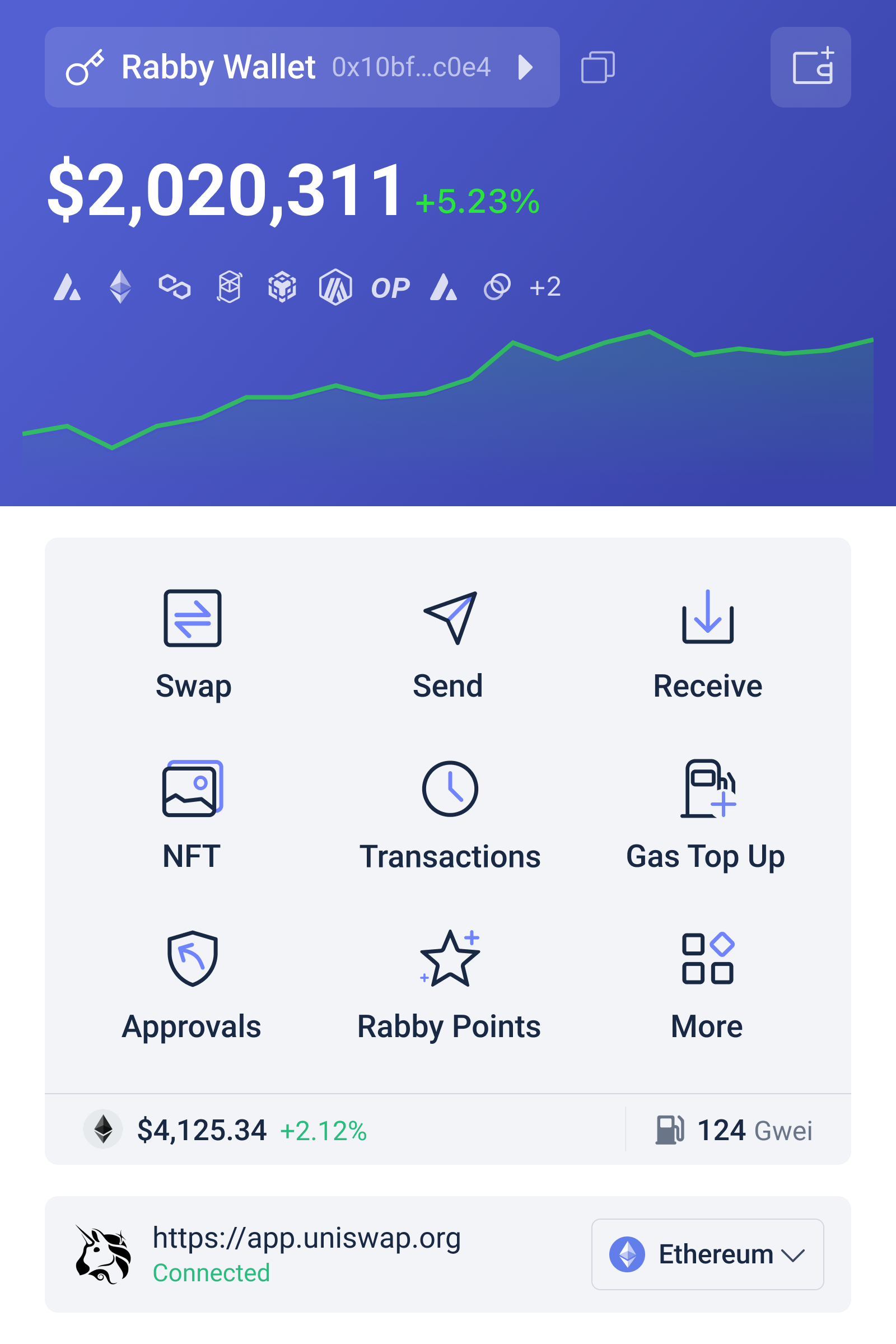
Recent project messaging positions rabby wallet as a wallet for Ethereum and EVM networks, with an emphasis on on-chain use, broad chain coverage, and access through browser environments such as Chrome and Brave. For DeFi users, the relevant analytical question is how those features combine with risk assessment rather than how many chains appear in a feature list.
Compared with a basic browser wallet that primarily presents signing requests, a transaction-aware multi-chain wallet may offer a richer pre-signing review. That can be particularly useful for users who interact with decentralized exchanges, lending protocols, staking systems, and governance contracts regularly. The trade-off is that more information creates a learning obligation. A warning is only useful if the user understands what it signals and does not automatically dismiss it as routine interface noise.
A hardware wallet takes a different approach. Its strongest contribution is often isolation of key material and a separate confirmation surface, which can reduce exposure to some forms of malware. It does not independently determine whether a protocol is economically sound, whether a token is authentic, or whether the user is approving an excessive allowance. Hardware protection and transaction interpretation address different failure modes; they are complementary rather than interchangeable.
Institutional or highly technical users may also interact through command-line tools, multisignature systems, or specialized portfolio platforms. These can support stronger separation of duties and more deliberate review, but they introduce configuration complexity and operational overhead. For an individual DeFi user, the best choice depends on the balance between convenience, signing frequency, asset value, and willingness to verify details manually.
The limits of security warnings and simulations
Security features are most useful when their boundaries are explicit. A warning system can identify suspicious patterns, known risks, or inconsistencies, but it cannot prove that an application will remain honest after approval. A simulation can display an expected outcome, but it may not capture future contract upgrades, governance changes, oracle manipulation, front-running, or a chain-level failure that occurs after signing.
There is also a human-factors limitation. Frequent users develop habits. If every transaction produces warnings, the user may click through them without reading. Conversely, an unfamiliar warning may cause unnecessary alarm when the underlying action is legitimate but technically unusual. The quality of risk assessment therefore depends on calibrated attention: routine, low-value actions can follow a standard checklist, while new contracts, large transfers, leveraged positions, and permissions deserve a slower review.
Approval management illustrates the point. An approval authorizes a contract to spend a token according to defined rules. It may be convenient because the user does not need to approve every later interaction, but a broad or indefinite allowance can increase potential exposure if the contract is compromised or the user later forgets about it. Revoking approvals can reduce that exposure, yet revocation itself involves a transaction, fees, and the possibility that the user misunderstands which permission is being removed.
A reusable framework for safer DeFi decisions
A compact framework is to separate risk assessment into intent, authority, outcome, and recovery. First, state the intent in plain language: “I am exchanging this asset for that asset,” or “I am supplying funds to this lending market.” If the transaction cannot be described clearly, it is not ready to sign.
Second, inspect authority. What permission is being granted, to which contract, and for how long? A transfer of a known amount is materially different from an unrestricted allowance. Third, compare the predicted outcome with the intended one. Review the network, token, recipient, estimated amounts, and any unusual changes in balance or permissions. Finally, consider recovery. If the transaction fails, the asset arrives in an unexpected form, or the contract later becomes unsafe, what action is available? Some errors are reversible; others are not.
This framework also improves decisions about wallet selection. A wallet with clearer transaction context may be preferable when the main problem is signing uncertainty. A hardware device may be more important when key exposure is the dominant concern. A multisignature arrangement may fit shared or high-value funds where no single signer should have unilateral control. The correct design is determined by the failure mode being managed, not by the length of a feature list.
What to watch as wallet security evolves
The likely direction of wallet design is toward richer interpretation: clearer descriptions of contract behavior, better separation of account and chain context, and more visible treatment of permissions. If these systems become more accurate without becoming overwhelming, they could shift the wallet from a passive signing tool toward a decision-support layer for on-chain activity.
That outcome is conditional. It depends on reliable data, transparent handling of uncertainty, and users who understand that a prediction is not a promise. The most valuable interfaces may not be those that eliminate every warning, but those that explain why a transaction is unusual and distinguish a genuine security concern from ordinary technical complexity.
Frequently asked questions
Does transaction simulation make a DeFi transaction safe?
No. Simulation can reveal the expected state change and expose some suspicious or unintended behavior, but it depends on available chain data and contract conditions. It cannot guarantee that a protocol is solvent, that a contract will not change, or that market conditions will remain stable.
Why does a multi-chain wallet require extra caution?
Because the same account may operate across networks with different contracts, assets, fee systems, and bridge mechanisms. A transaction can be technically valid yet economically wrong if it is performed on the wrong chain or with an unintended token representation.
Is a hardware wallet a substitute for a transaction-aware wallet?
No. Hardware protection focuses primarily on safeguarding key material and requiring a separate confirmation step. Transaction-aware tools focus on interpreting what a contract call is expected to do. For higher-value activity, using both forms of protection can address different risks.
What is the most useful habit for advanced DeFi users?
Describe the intended economic outcome before signing, then verify the account, network, contract, permissions, and predicted balance changes. This habit remains useful regardless of which wallet, chain, or application is being used.
Sorry, the comment form is closed at this time.