

23 Nov DeFi Security After the Approval: Why Transaction Simulation Is Only Half the Defense
A wallet can show a transaction as “successful” while the user loses control of valuable assets moments later. That counterintuitive outcome explains why DeFi security is no longer just a question of whether a transaction will execute. The more important questions are what the transaction authorizes, which contracts receive that authority, and whether the permission remains active after the original swap or deposit is complete.
For US users moving between decentralized exchanges, lending protocols, bridges, and staking applications, the practical security problem has evolved. Early cryptocurrency wallets largely asked users to confirm opaque strings of contract data. Modern wallets increasingly simulate transactions and display warnings, but those improvements do not eliminate the need for token approval management. They address different parts of the risk.
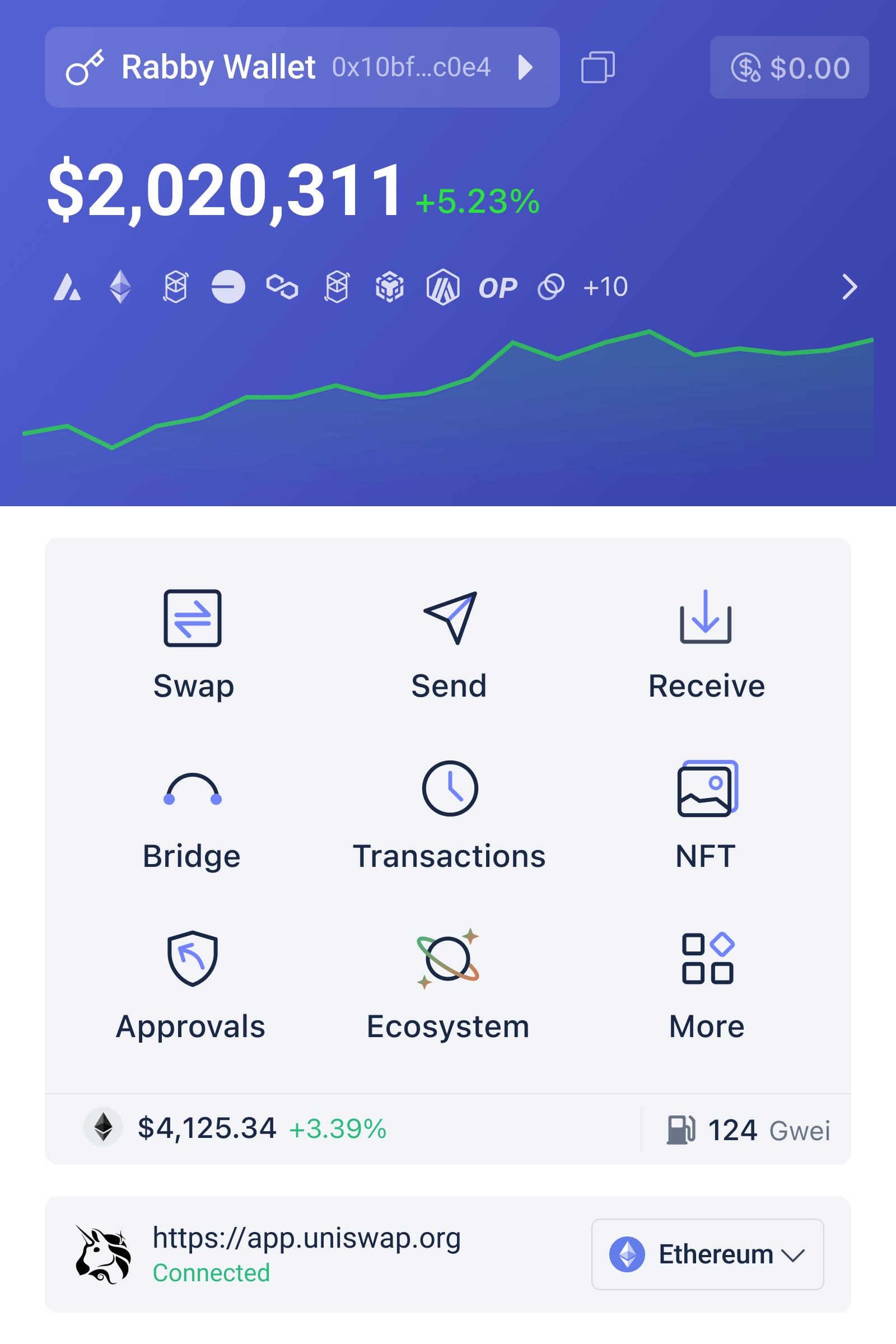
From blind signing to transaction-aware review
The historical weakness of DeFi interfaces was not necessarily that users lacked caution. It was that the information presented at the signing step was poorly matched to the decision being made. A user might see a contract address, a gas estimate, and a request to confirm, but not a plain-language explanation that the action would exchange one asset, deposit funds into a protocol, or grant an allowance to a spender.
Transaction simulation changed the model. Instead of examining only the proposed call, a wallet can attempt to execute that call in a controlled representation of the current blockchain state. The resulting state change may reveal that a user receives a particular token, loses another, or triggers a contract interaction with an unexpected outcome. This is a major improvement because it translates low-level instructions into an observable consequence.
Yet simulation is not prophecy. It is a conditional test based on available state, assumptions about execution, and the particular node or simulation environment. A transaction can behave differently if the market moves, a contract relies on external data, a block includes another transaction first, or the simulation cannot fully model a dependent system. The correct mental model is not “the wallet has proved this is safe.” It is “the wallet has supplied evidence about what this transaction is likely to do under specified conditions.”
That distinction matters because a malicious transaction may produce a plausible simulation. An attacker does not always need to make the immediate result look absurd. A call can appear to transfer a small amount while granting a broad permission for later use, or it can route through a familiar-looking application whose front end has been compromised. Simulation improves visibility into effects; it does not establish that the destination contract is trustworthy or that the user intended every permission involved.
Simulation and approvals solve different problems
Consider two alternatives: relying mainly on transaction simulation, or combining simulation with active approval management. Simulation is strongest at the moment of signing. It helps answer, “What will this transaction change?” Approval management addresses the longer-lived question, “What can this spender do later?” The first is an execution review; the second is an authority review.
When a token uses an allowance model, a user may authorize a smart contract to spend tokens on the user’s behalf up to a stated amount. Some interfaces request only the amount needed for a single action. Others request a very large allowance to avoid repeated approval transactions. The latter can be convenient, but it creates a standing capability. If the approved contract is later exploited, upgraded in an unsafe way, or controlled by a compromised key, the allowance may become an avenue for draining the token balance.
This is the non-obvious point: the risk of a DeFi interaction can outlive the transaction that created it. A successful swap may leave behind a permission that receives no attention because the user remembers the trade, not the authorization. Revoking an approval later can reduce exposure, but it generally requires another on-chain transaction, consumes gas, and may not undo an action already taken by a malicious spender.
For that reason, a sensible comparison is not “simulation or revocation.” It is a layered process. Before signing, inspect the simulated asset changes and the identity of the spender. During the interaction, question requests for unlimited or unusually broad allowances. Afterward, review active approvals and remove permissions that no longer serve a clear purpose. A user who skips any one layer may still be protected in some cases, but the overall defense becomes more dependent on luck and interface accuracy.
What a careful Rabby workflow can and cannot establish
Users planning to install the Rabby browser extension should obtain it through a source they can verify, then treat the extension as a review instrument rather than a substitute for judgment. A useful starting point for the rabby extension download is to confirm the source, check the requested browser permissions, and avoid importing a seed phrase into an untrusted page or pop-up.
Once installed, a transaction-aware wallet can help users inspect several categories of information: the assets expected to leave the wallet, the assets expected to arrive, contract interactions, possible warnings, and approval-related requests. This is especially valuable when a DeFi application uses multiple contracts behind a single button. The visible action may say “deposit,” while the underlying sequence includes an approval, a transfer, and a call to a protocol contract.
However, the wallet’s interpretation can be incomplete or conservative. Token standards are implemented by contracts, not by a central authority that guarantees uniform behavior. Some assets use unusual mechanics, some protocols rely on proxy contracts or upgradeable components, and some operations depend on signatures that do not immediately move funds. A clean display should therefore be treated as a positive signal, not a security certificate.
Users should also distinguish between a transaction that changes the blockchain and a signed message that authorizes an off-chain or later action. Permit-style signatures and other typed-data requests can sometimes approve spending without looking like a conventional token approval transaction. The absence of an immediate balance change is not proof that no meaningful authority was granted. The decision depends on what the signature permits, who can use it, and how long it remains valid.
A practical decision framework for US DeFi users
Before signing, ask three questions. First, what exact assets should leave, and what should return? Second, which contract or spender receives authority, and is that authority limited to the intended amount and duration? Third, does the action make sense if the wallet interface, website branding, or urgency cues are ignored? This last question is useful because phishing often attacks context rather than code: a familiar logo can make an unfamiliar contract seem legitimate.
For routine activity, limited approvals are usually easier to reason about than unlimited approvals, although they may require additional transactions and gas. For a rarely used protocol, revoking the allowance after the intended operation can be a defensible trade-off. For active liquidity providers or frequent traders, constant revocation may be operationally burdensome and still cannot protect against every contract-level failure. The right policy depends on the value at risk, the frequency of use, and the user’s tolerance for cost and friction.
A separate wallet for experimentation can reduce the consequences of a mistake, but it does not make an untrusted application safe. Hardware wallets can protect private-key material from many forms of malware, yet they cannot make an intentionally approved transfer legitimate. In other words, key security and authorization security are related but distinct. Protecting the signing key is essential; controlling what the key signs is equally important.
The strongest near-term security gains are likely to come from better coordination among interfaces, wallets, protocol designers, and users. Wallets may improve simulations and make approvals more intelligible. Protocols may reduce unnecessary permissions and expose clearer contract relationships. Users still need to verify domains, question unexpected requests, and maintain an approval inventory. If any layer fails, the others can reduce—but not always eliminate—the resulting damage.
What to watch as DeFi interfaces mature
The direction of travel is clear even if the endpoint is not. More wallets are likely to present transactions as expected state changes rather than raw calldata. Protocols may increasingly adopt permission models that are narrower, temporary, or easier to revoke. These developments could reduce routine mistakes, but they may also create a new failure mode: users may trust polished risk scores without understanding what they measure.
The useful signal is not whether a wallet displays a green or red label. It is whether the explanation exposes the mechanism: the spender, the amount, the destination, the persistence of the permission, and the assumptions behind the simulation. If future tools make those details easier to compare, DeFi may become safer without pretending that smart-contract risk has disappeared.
Frequently asked questions
Does transaction simulation guarantee that a DeFi transaction is safe?
No. Simulation provides an estimate of the transaction’s likely effects under a particular blockchain state and execution model. It may not capture future price movement, external data changes, contract upgrades, complex dependencies, or the trustworthiness of the destination. Use it as an evidence layer, not as a guarantee.
Why should I review token approvals after a successful swap?
A swap can create or leave active permission for a spender to use a token later. If that permission is broader than necessary, the spender may retain access to tokens in the wallet, subject to the token and contract’s mechanics. Reviewing and revoking unnecessary approvals can reduce that standing exposure, though revocation costs gas and cannot reverse funds already taken.
Are unlimited approvals always dangerous?
They are not automatically malicious, but they create more potential exposure than a narrowly sized allowance. The trade-off is convenience versus containment. A frequently used, well-understood protocol may lead some users to accept the convenience, while a new or rarely used application may justify a limited approval and later revocation.
What is the single most useful habit when using a browser wallet?
Pause at the signing step and compare the requested authority with the action you intended. Do not focus only on whether the transaction will succeed. Check what leaves the wallet, who can spend tokens afterward, whether a signature is granting future authority, and whether the application’s domain and contract details are consistent with your expectations.
Sorry, the comment form is closed at this time.